Locked Storage Devices to Reduce Household Firearm Injuries and Fatalities

There is sufficient evidence that the provision of locked storage devices is associated with an improvement in social outcomes, specifically the use of safe practices for firearm storage in households.

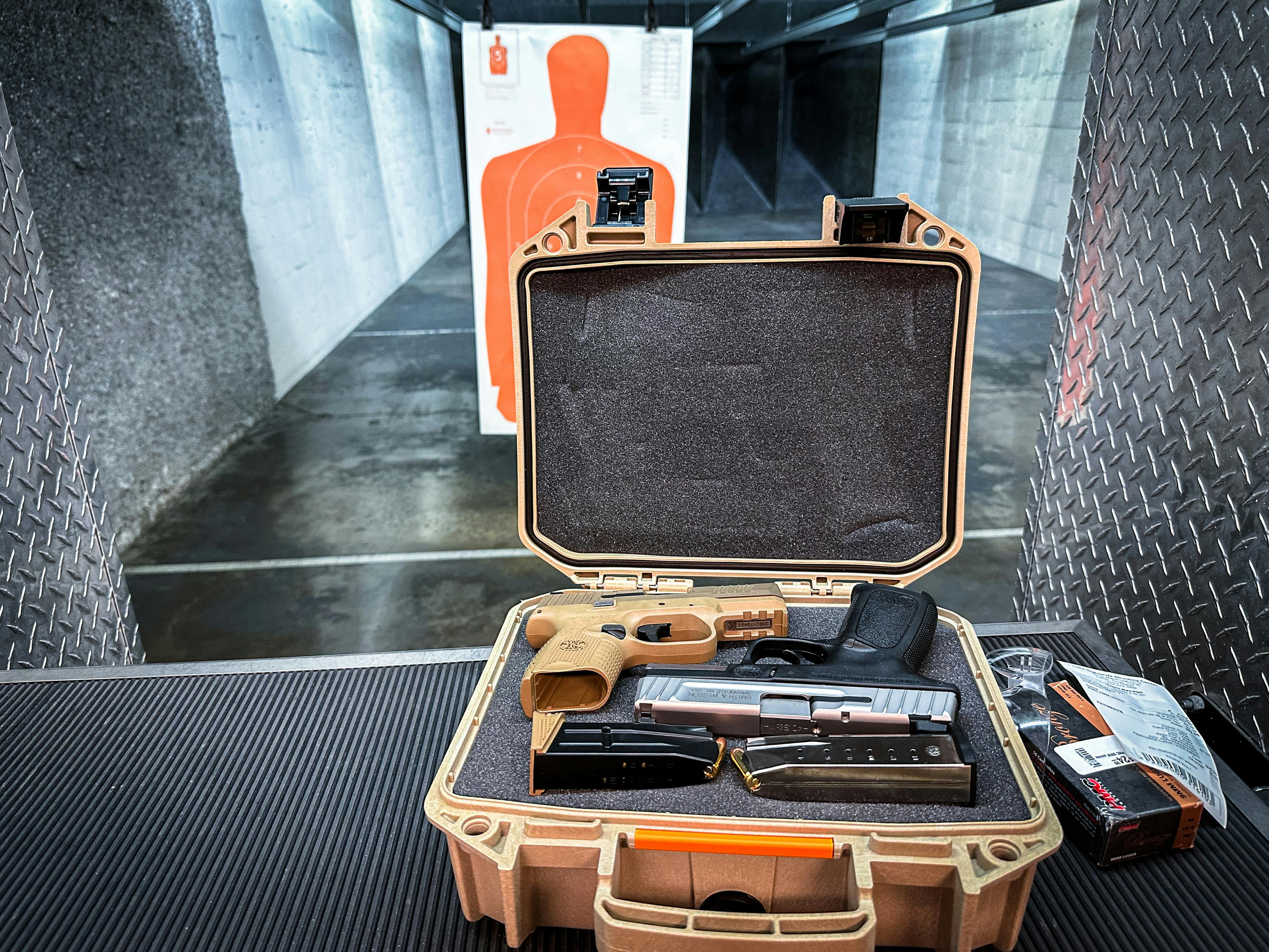
Assessment Post Image

Study Characteristics and Contextual Tags

chevron
Impact Assessment

The findings below synthesize the results of the studies on locked storage devices across three domains of measurement:

  • Healthcare Cost, Utilization & Value: More evidence is needed on the association between the implementation of household locked storage devices and reduced healthcare cost, utilization, and value. The evidence across study designs, including randomized controlled trials, observational studies, and descriptive analyses, focuses primarily on firearm owners’ implementation of safe storage practices. Whether these social outcomes translate to impacts on healthcare cost, utilization, and value will need to be explored in future research.
  • Health: More evidence is needed on the health impacts of the provision of household locked storage devices and firearm injuries and fatalities. The evidence across study designs, including randomized controlled trials, observational studies, and descriptive analyses, focuses primarily on firearm owners’ implementation of safe storage practices and not specific health outcomes.
  • Social: There is sufficient evidence on the social impacts of interventions that provide household locked storage devices to firearm owners. This evidence was consistent across study types, except for one randomized controlled trial, which did not find any significant intervention effect. Intervention approaches ranged from providing free locked storage devices to providing coupons to reduce their cost, and connecting families with community resources to help them install the devices.
Background of the Need / Need Impact on Health

A firearm-related injury is a gunshot wound or penetrating injury from a weapon that uses a powder charge to fire a projectile (e.g., bullet)[1]. Firearm injuries may be fatal or nonfatal, and include unintentional injury due to cleaning or a child playing with a gun, self-inflicted injuries, and interpersonal violence. Globally, the United States (U.S.) falls in the 93rd percentile for overall firearm mortality, 92nd percentile for children and teens, and 96th percentile for women[2]. The most common reason cited for firearm ownership in the U.S. is personal protection (72% of cases), followed by sporting activities such as hunting and sport shooting[3]. While peer countries have achieved a steady and measurable decrease in firearm-related child deaths, rates in the U.S. have steadily increased over the past two decades[4]. 

In the U.S., firearm injuries are a growing public health problem[5]. While firearm related injuries and fatalities increased sharply during the COVID-19 pandemic with 2020 seeing the highest firearm related homicide rate in over 25 years (45,000)[6],[7], these rates have remained historically high[8],[9]. In 2023, nearly 47,000 people died of gun-related injuries, the majority of these deaths (58%) being deaths by suicide, followed by homicides (38%)[10],[11]. Deaths by firearm homicides are highest among males, young adults and Black, Alaska Native and American Indian populations[12],[13]. Regarding trends in household firearm-related injuries, the Centers for Disease Control and Prevention (CDC) emphasized that “the reasons for the increasing rates and widening disparities are likely complex” and, as such, “strategies should address the underlying physical, social, economic, and structural conditions known to increase firearm homicide and suicide risks[14].” 

Background on the Intervention

An objective of Healthy People 2030 is to reduce firearm deaths, which include homicides, suicides, and unintentional injuries[15]. This objective emphasizes that “comprehensive state- and community-level prevention strategies are critical for reducing the risk for violence that leads to firearm-related deaths.” 

Unintentional firearm injuries, in particular, frequently occur in the home and disproportionately affect children and adolescents who may access unsecured firearms[16]. Based on data from 2003-2021, the largest percentage of unintentional firearm injury deaths was in the 11-15 age group (33%)[17]. Household firearm storage practices involve keeping guns locked and unloaded, separating firearms from ammunitions when they are not in use[18], and ensuring that all household members understand safety guidelines pertaining to firearm possession. These practices are considered some of the most effective ways to reduce the risk of unintentional and self-inflicted firearm injuries within a household[19],[20]. Triple-safe storage (TSS), which is the storage of firearms and ammunition separately, both with a locking device (e.g., cabinet or trigger lock, etc.), is the most widely studied intervention to reduce firearm injury[21]. 

Additional Research and Tools
Evidence Review
Note: The vocabulary used in the table is the same terminology used in the study in order to preserve the integrity of the summary. 
Study
Population
Intervention Summary
Type of Study Design
Outcomes

Firearm-owning National Guard service members in Mississippi.

The program provided lethal means counseling, a 10-to-15-minute conversation where clinicians used motivational interviewing to identify methods for safe firearm storage and reflect on participants’ reasons for and against these methods, ending with a written plan and the distribution of free or low-cost cable locks.

Randomized controlled trial. N=232. Participants were randomized into one of four groups: (1) lethal means counseling (N=59), (2) lethal means counseling plus given cable locks (N=55), (3) health and stress counseling plus cable locks (N= 62), or (4) health and stress counseling alone (control; N=56).

Social: Compared to the control, lethal means counseling and provision of cable locks resulted in greater adoption of several safe storage methods over time. The lethal means counseling significantly improved storage over the control counseling at six months (55.0% vs 39.0%; odds ratio OR=1.91, 95% confidence interval CI 1.10-3.32 ). Cable locks improved storage methods and use of locking devices over control counseling (OR = 3.49, CI 1.98-6.14 and OR=2.52,95% CI 1.44-4.40, respectively). Delivery of lethal means counseling and administration of cable locks resulted in sustained changes in firearm storage in this randomized trial.

Primary caregivers of children aged two to 11 during well visits.

A pediatric office-based, violence-prevention intervention. The Safety Check intervention had 5 components: (1) provider or staff in participating practices identified community-specific resources for child aggression or anger/behavior; (2) parent completed a pre-visit summary page to assess behaviors and concerns about media use, discipline strategies, and children's exposure to firearms; (3) provider was trained to apply brief motivational interviewing techniques to discuss media use, discipline strategies, and children's access to firearms when parents expressed concern or when the provider was concerned after reviewing family behaviors; (4) provider offered tangible tools (minute timers for timeouts and limiting media; cable locks to store firearms more safely) when indicated as per the pre-visit summary; and (5) provider offered a local agency referral when parents or practitioners were concerned about childhood aggression.

Randomized controlled trial. N=1,805 with 122 pediatric practices in the intervention group; and N=1,479 with 119 pediatric practices in the control group. 72% of reported gun owners (N=470) received free firearm cable locks in addition to the education.

Social: There was a statistically significant increase in storing firearms with cable locks for the intervention group, as compared to a decrease for the control group. This effect was strong and consistent over the six-month study timeframe.

Families seen for a scheduled appointment for well-child care for a child less than 18 years at primary care practices at Group Health Cooperative, the largest staff-model health maintenance organization in the state of Washington.

Gun safety counseling during well-child care visits at Group Health Cooperative. Each family in the intervention group was given a 60-second message by their practitioner that depended on the presence of guns in the home. Families without guns were informed of the health risks associated with gun ownership and given a standard information pamphlet. Families with guns were given the same information about risks and were told that if they chose to keep a gun, they were to store it locked and unloaded. They were given instructions on storage and a folder with material, including the same pamphlet, a letter from the police department, written storage guidelines, and discount coupons for gun storage devices.

Randomized controlled trial. N=1,295.

Social: There were no important differences between intervention and control groups in the rate of acquisition of new guns (intervention: 1.3% vs control: 0.9%) after the intervention. Among households with guns at baseline, there were also no differences between groups in the removal of guns (intervention: 6.7% vs control: 5.7%), but there was a fairly large nonsignificant difference in the proportion who purchased trigger locks (intervention: 8.0% vs control: 2.5%).

Therefore, the authors concluded that a single firearm safety-counseling session during well-child care combined with economic incentives to purchase safe storage devices did not lead to changes in household gun ownership and did not lead to statistically significant overall changes in storage patterns.

The site for this study was the Bristol Bay and Yukon-Kuskokwim Delta regions of western Alaska. Households were included in the study if they met all of the following criteria: (1) there was at least one adult respondent older than 21 years present at the time of enrollment period, (2) the respondent was one of the principal owners or renters of the dwelling, (3) the respondent reported at least one gun usually present in the household, and (4) the household did not already possess an operational gun safe to store long guns.

The intervention included the installation of a free metal gun cabinet, along with instructions and a handout on use, and a brief safety message about keeping all guns and ammunition locked in the cabinet. The homeowners were also instructed to keep the key in a secure location. Participants were informed that the cabinet had to be installed by staff to prevent injury and relocation of the cabinet. The installer observed and certified that all guns and ammunition were secured in the cabinet after demonstrating its use. The "early" group received the intervention at baseline, and the "late" group received it at 12 months. Up to two gun cabinets were installed in each enrolled home, along with safety messages.

Randomized controlled trial. N=103 in the early group and N=103 in the late group at the 18-month follow-up.

Social: Gun cabinet installation in rural Alaskan households improved the storage of guns and ammunition. At baseline, 93% of study participant households reported at least one unlocked gun in the home, and 89% reported unlocked ammunition. At the 12-month follow-up, 35% of homes in the early intervention group reported unlocked guns, compared with 89% in the late group (p<0.001). Similarly, 36% of the early homes reported unlocked ammunition, compared with 84% of the late intervention group (p<0.001). The difference between both groups’ storage practices disappeared at 18 months, with the late group mirroring the 36% rate of the early group at study end. The direct observations of unlocked guns corroborated the survey reports with a significant decrease from 20% to 8% between the groups (p<0.03). The installation of gun cabinets in households without firearms did not appear to increase the acquisition of a firearm.

Residents of King County, Washington.

A safe-storage campaign (television and radio announcements, educational materials, billboards, and coupons) for lock boxes conducted in King County, Washington. The campaign evaluation used a quasi-experimental design and compared the intervention site with nine control counties outside Washington State and west of the Mississippi River.

Observational study with a comparison group. N=302 prior to and N=255 after the campaign.

Social: Following the campaign intervention, storage of handguns in lock boxes or gun safes increased significantly in households exposed to the campaign (adjusted OR=1.71, 95% CI 1.03-2.84) and in households in the control counties (OR=1.66, 95% CI 1.01-2.72). Households in the intervention county did not differ from control counties in safe storage practice improvement. The study authors theorized that improvements across both groups may have been due to a simultaneously occurring national safe storage campaign, which minimized detectable differences between groups.

Local Seattle, Washington hospitals, health departments, and violence/injury prevention coalitions. The study population was 61% male, predominantly White (74%), and just over half had children (17 years or younger) living in the home.

A community-based firearm safety intervention, including the distribution of a free, participant-selected locking device for improved safe firearm storage practices among participants.

Pre-post analysis. N=206 participants completed the baseline and follow up survey.

Social: At follow-up, there was a significantly greater proportion of respondents who reported that all household firearms were locked (13.7%) and unloaded (8.5%). Triple-safe storage (TSS) practices increased by 12.6% at follow-up. The majority of respondents reported they would be ‘comfortable’ or ‘very comfortable’ discussing firearm safety with various types of safety counselors, though women reported less comfort than men.

Communities in the Midwest region of the United States.

10 community presentations on parenting teenagers, which included education about safe storage of firearms and medications. These were also paired with tools to enact change. Free cable gun locks were offered to help parents implement the recommended storage practices, which is TSS.

Pre-post analysis. N=581 at baseline and N=410 in the final survey.

Social: At study end, the prevalence of TSS increased 5.9 times (95% CI 2.6-13.5, p< 0.001). This study adds to the body of evidence proving that provision of the tools to implement safe storage practices (firearm locks) has a profound effect on uptake of the recommendation.

Participants were enrolled from the 38-bed emergency department (ED) and the 41-bed inpatient Psychiatry and Behavioral Medicine Unit of the study hospital, a tertiary care pediatric center. ED patients were classified as having a mental health (MH) complaint if they were evaluated by the ED MH team. This evaluation was prompted by a patient’s presenting complaint or, rarely, if an emergent MH need was identified during medical care.

Household members were eligible for the study if they were proficient in English and stored at least one firearm in the household they shared with a patient under 18 years old being evaluated for a MH complaint.

Households were defined as homes where patients would spend at least one of the seven days after discharge.

Provision of firearm storage devices and training during clinical care. While participants in the observation phase only received clinical care, participants in the intervention phase were randomized to be offered a firearm storage device at no to low cost ($5) as well as training on proper use.

Observational study with a comparison group. N=165 in the intervention phase and N=91 in the observation phase.

Social: In the intervention phase, TSS increased from 32% (95% CI 25%-39%) at baseline to 56% (95% CI 48%-64%) in one week and gains were sustained at one month (56%) (95% CI 47%-64%). Among those not practicing TSS at baseline, seven-day TSS was higher in the intervention (38%) compared to the observation phase (14%, p=0.001). The authors concluded that the distribution and training in the use of firearm storage devices increased TSS in the study population.

Systematic Reviews
Note: The vocabulary used in the table is the same terminology used in the study in order to preserve the integrity of the summary. 
Study
Population
Intervention Summary
Type of Study Design
Outcomes
Rowhani-Rahbar et al. (2016)

People with firearms.

Interventions to promote safe firearm storage.

Systematic review. A total of seven clinic- and community-based studies incorporating counseling (with or without safety device provision) were chosen for inclusion.

Social: Study authors found that all three studies that provided a safety device significantly improved firearm storage practices, whereas three of four studies that did not provide the storage/safety device failed to show any intervention effect.

Violano et al. (2018)

Homes with firearms.

Firearm storage practices, including gun locks.

Literature review. Out of 296 studies initially identified, only eight met the inclusion criteria of analysis of the two primary study questions: (1) should gun locks be used to prevent firearm injuries? (two studies) and (2) should safe storage for guns be used to prevent firearm injuries? (six studies).

Health: The authors concluded that they “conditionally recommend that gun locks be used to prevent unintentional firearm injury” and based on “the large effect size and the reasonable quality of available evidence with safe storage of firearms…recommend safe storage [triple -safe storage] to prevent firearm-related injuries.”

Assessment Synthesis Criteria
Strong Evidence
There is strong evidence that the intervention will produce the intended outcomes.
  • At least one well-conducted systematic review or meta-analysis (including two or more large, randomized trials) showing a significant and clinically meaningful health effect; and  
  • Consistent findings of health effects from other studies (cohort, case-control, and other designs).
Sufficient Evidence
There is sufficient evidence that the intervention will produce the intended outcomes.
  • At least one well-conducted systematic review or meta-analysis (including two or more large, randomized trials) showing a significant and clinically meaningful health effect, but inconsistent findings in other studies; or
  • Consistent findings from at least three non-randomized controlled trial studies (cohorts, practical trials, analysis of secondary data); or
  • A single, sufficiently large well-conducted randomized controlled trial demonstrating clinically meaningful health effect and consistent evidence from other studies; or
  • Multiple expert opinions/government agencies supporting the intervention.
More Evidence Needed or Mixed Evidence
There is insufficient evidence that the intervention will produce the intended outcomes, however the results may indicate potential impact.
  • Lack of demonstration of improved health outcomes based on any of the following: (a) a systematic review or meta-analysis; (b) a large randomized controlled trial; (c) consistent positive results from multiple studies in high-quality journals; or (d) multiple expert opinions or government agencies supporting the intervention.
  • An insufficient evidence rating does not mean there is no evidence, or that the intervention is unsafe or ineffective.
  • In many cases, there is a need for more research or longer-term follow-up.
There is strong evidence that the intervention will produce the intended outcomes.
There is sufficient evidence that the intervention will produce the intended outcomes.
There is insufficient evidence that the intervention will produce the intended outcomes, however the results may indicate potential impact.
  • At least one well-conducted systematic review or meta-analysis (including two or more large, randomized trials) showing a significant and clinically meaningful health effect; and  
  • Consistent findings of health effects from other studies (cohort, case-control, and other designs).
  • At least one well-conducted systematic review or meta-analysis (including two or more large, randomized trials) showing a significant and clinically meaningful health effect, but inconsistent findings in other studies; or
  • Consistent findings from at least three non-randomized controlled trial studies (cohorts, practical trials, analysis of secondary data); or
  • A single, sufficiently large well-conducted randomized controlled trial demonstrating clinically meaningful health effect and consistent evidence from other studies; or
  • Multiple expert opinions/government agencies supporting the intervention.
  • Lack of demonstration of improved health outcomes based on any of the following: (a) a systematic review or meta-analysis; (b) a large randomized controlled trial; (c) consistent positive results from multiple studies in high-quality journals; or (d) multiple expert opinions or government agencies supporting the intervention.
  • An insufficient evidence rating does not mean there is no evidence, or that the intervention is unsafe or ineffective.
  • In many cases, there is a need for more research or longer-term follow-up.
Sources

[1] Centres for Disease Control. (2025, January 15). Firearm-related injury 2025 Case Definition. https://ndc.services.cdc.gov/case-definitions/injuries-related-to-firearms/

[2] Gumas, E. D., Gunja, M. Z., & Williams II, R. D. (2024). Comparing Deaths from Gun Violence in the U.S. with Other Countries. Commonwealthfund.org. https://www.commonwealthfund.org/publications/2024/oct/comparing-deaths-gun-violence-us-other-countries

[3] Pew Research Center. (2023, August 16). For Most U.S. Gun Owners, Protection Is the Main Reason They Own a Gun. https://www.pewresearch.org/politics/2023/08/16/for-most-u-s-gun-owners-protection-is-the-main-reason-they-own-a-gun/

[4] KFF. (2023, July 18). U.S. Has the Highest Rate of Gun Deaths for Children and Teens Among Peer Countries. https://www.kff.org/mental-health/u-s-has-the-highest-rate-of-gun-deaths-for-children-and-teens-among-peer-countries/

[5] Centres for Disease Control. (2022, May 10). Firearm Deaths Grow, Disparities Widen. Centers Disease Control and Prevention. https://www.cdc.gov/vitalsigns/firearm-deaths/index.html

[6] Kegler, S. R., Simon, T. R., Zwald, M. L., Chen, M. S., Mercy, J. A., Jones, C. M., Mercado-Crespo, M. C., Blair, J. M., Stone, D. M., Ottley, P. G., & Dills, J. (2022). Vital Signs: Changes in Firearm Homicide and Suicide Rates — United States, 2019–2020. MMWR. Morbidity and Mortality Weefirearm-relatedhighkly Report, 71(19). https://doi.org/10.15585/mmwr.mm7119e1

[7] Chan, M. (2022). Firearm homicide rate rose to historic high in 2020, CDC says. NBC News. https://www.nbcnews.com/news/us-news/firearm-homicide-rate-rose-historic-high-2020-cdc-says-rcna2,,,irearm-relatedfirearm-related8159

[8] Hoffman, C. (2022, May 2). Report: CDC records highest-ever number of gun-related deaths in 2020. The Hub. https://hub.jhu.edu/2022/05/02/highest-number-of-gun-related-deaths-in-2020-report/

[9] New Data: Record Number of Gun Deaths in 2020. (2021). Giffords. https://giffords.org/press-release/2021/10/2020-cdc-data-shows-record-number-of-gun-deaths/

[10] Gramlich, J. (2025, March 5). What the data says about gun deaths in the U.S. Pew Research Center. https://www.pewresearch.org/short-reads/2025/03/05/what-the-data-says-about-gun-deaths-in-the-u-s/

[11] Johns Hopkins Center for Gun Violence Solutions. (2022). A Year in Review: 2020 Gun Deaths in the U.S. https://publichealth.jhu.edu/sites/default/files/2022-05/2020-gun-deaths-in-the-us-4-28-2022-b.pdf

[12] CDC MMWR. (2023). QuickStats: Age-Adjusted Rates of Firearm-Related Homicide, by Race, Hispanic Origin, and Sex — National Vital Statistics System, United States, 2021. MMWR. Morbidity and Mortality Weekly Report, 72. https://doi.org/10.15585/mmwr.mm7226a9

[13] Kegler, S. R., Simon, T. R., Zwald, M. L., Chen, M. S., Mercy, J. A., Jones, C. M., Mercado-Crespo, M. C., Blair, J. M., Stone, D. M., Ottley, P. G., & Dills, J. (2022). Vital Signs: Changes in Firearm Homicide and Suicide Rates — United States, 2019–2020. MMWR. Morbidity and Mortality Weelargestkly Report, 71(19). https://doi.org/10.15585/mmwr.mm7119e1

[14] CDC. (2022, May 10). Firearm Deaths Grow, Disparities Widen. Centers for Disease Control and Prevention. https://www.cdc.gov/vitalsigns/firearm-deaths/index.html

[15] Reduce firearm-related deaths — IVP‑13 - Healthy People 2030. (2022). Health.gov. https://odphp.health.gov/healthypeople/objectives-and-data/browse-objectives/violence-prevention/reduce-firearm-related-deaths-ivp-13

[16] Wilson, R. F., Mintz, S., Blair, J. M., Betz, C. J., Collier, A., & Fowler, K. A. (2023). Unintentional firearm injury deaths among children and adolescents aged 0–17 years—National Violent Death Reporting System, United States, 2003–2021. MMWR. Morbidity and Mortality Weekly Report, 72.

[17] Wilson, R. F., Mintz, S., Blair, J. M., Betz, C. J., Collier, A., & Fowler, K. A. (2023). Unintentional firearm injury deaths among children and adolescents aged 0–17 years—National Violent Death Reporting System, United States, 2003–2021. MMWR. Morbidity and Mortality Weekly Report, 72.

[18] Illinois Department of Health. (2025). Safe Storage. https://dph.illinois.gov/topics-services/prevention-wellness/gun-safety/safe-storage.html

[19] Grossman, D. C., Mueller, B. A., Riedy, C., Dowd, M. D., Villaveces, A., Prodzinski, J., Nakagawara, J., Howard, J., Thiersch, N., & Harruff, R. (2005). Gun storage practices and risk of youth suicide and unintentional firearm injuries. JAMA, 293(6), 707–714. https://doi.org/10.1001/jama.293.6.707

[20] ​​Smart, R. (2018). Education Campaigns and Clinical Interventions for Promoting Safe Storage. Rand.org. https://rand.org/research/gun-policy/analysis/supplementary/safe-storage.html

[21] Grossman, D. C., Mueller, B. A., Riedy, C., Dowd, M. D., Villaveces, A., Prodzinski, J., Nakagawara, J., Howard, J., Thiersch, N., & Harruff, R. (2005). Gun storage practices and risk of youth suicide and unintentional firearm injuries. JAMA, 293(6), 707–714. https://doi.org/10.1001/jama.293.6.707

Share Your Needs or Insights

Request a topic or share new data with us.
This field is required.
Thank you! Your submission has been received!
Oops! Something went wrong while submitting the form.